


イル・チェンバロ・ディ・パルテノペ
イル・チェンバロ・ディ・パルテノペ
受取状況を読み込めませんでした
カタリナ・ビセンス – チェンバロ
世界最古の演奏可能な楽器であるチェンバロのためのイタリア音楽(ナポリ 1525 年)
アルバムについて
チェンバロ奏者カタリナ・ビセンスのニューアルバムは、音楽と詩の両面に富んだ、他に類を見ない多面的なプロジェクトです。まず、世界最古の演奏可能なチェンバロ、サウスダコタ州バーミリオンの国立音楽博物館に所蔵されている貴重な宝物をフィーチャーしています。彼女は、1525年頃のイタリア、ナポリの音楽を演奏します。この楽器がナポリで実際に作られたのも、この年です。
第二に、ヴィセンス女史は、歴史的事実に基づきつつ、この貴重な歴史的ハープシコードとの出会いから生まれた詩的なインスピレーションも踏まえ、まさにその楽器の生涯と物語を想像上の物語として描き出しました。CDには、ヴィセンス女史自身のナレーションとアルバム収録曲によるオリジナル楽曲を収録した、同じ物語の無料オーディオブックが付属しています。
ミュージックビデオ
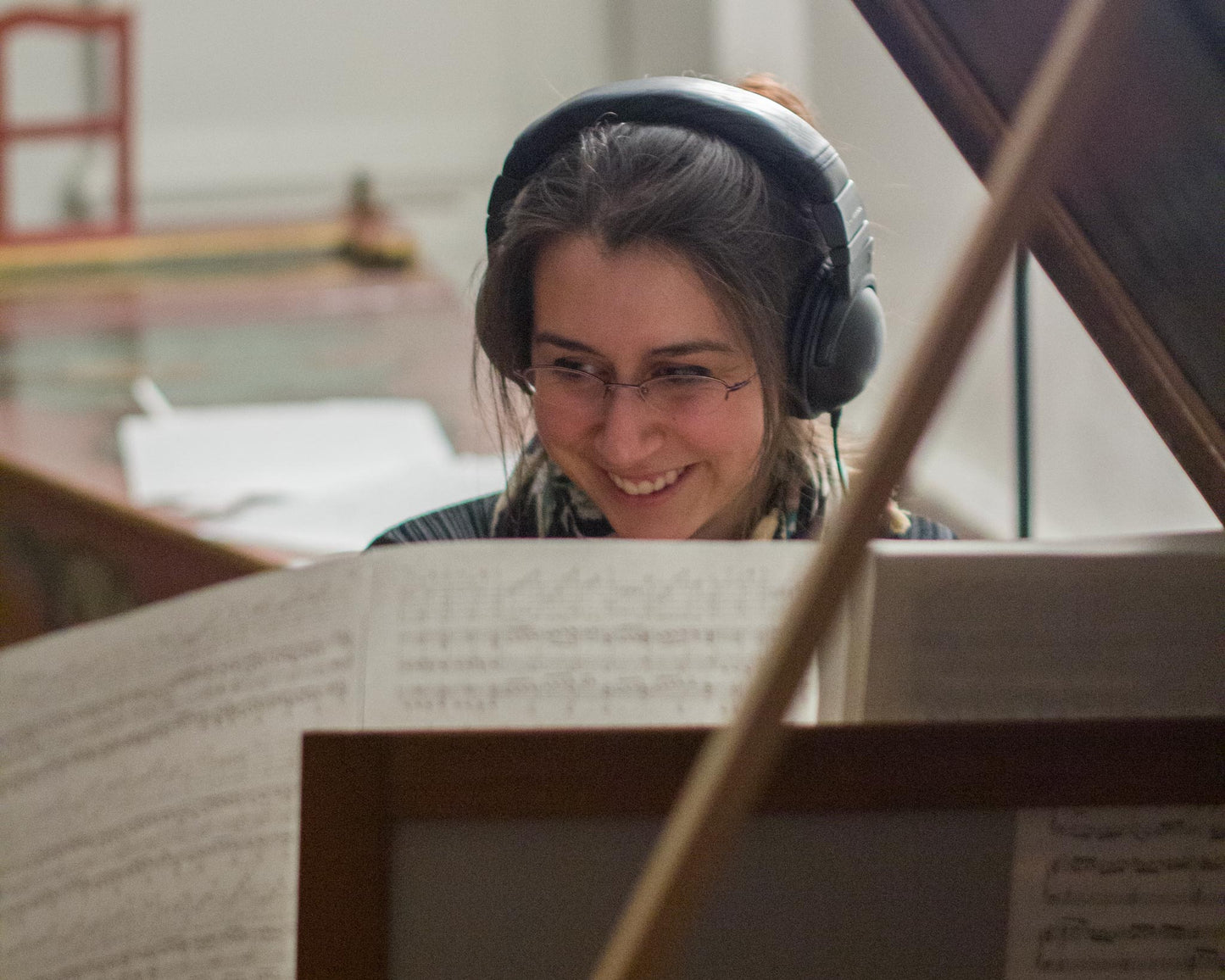
カタリナ・ビセンスがアルバムからの曲をオリジナルのハープシコードで演奏する様子をご覧ください。
音楽雑誌レビュー
カタリーナ・ビセンスは、イタリア・ナポリの楽器が1525年頃に作られた音楽を演奏しています。彼女は、歴史的事実に基づきつつ、この貴重な歴史的チェンバロとの出会いから生まれた詩的なインスピレーションを基に、この楽器の生涯と物語を想像上の物語として描き出しました。美しく制作されたCDには、同じ物語のオーディオブック(ビセンス本人によるナレーションとCD収録曲のオリジナル音源付き)が無料でダウンロードできます。これらの魅惑的な演奏は、カタリーナ・ビセンスの深い理解と完璧なテクニックを如実に示しています。壮麗なナポリの楽器の温かみのある音色と相まって、彼女はこの官能的で優雅、そして魅惑的な音楽への稀有で啓示的な洞察を提供します。ファンファーレ誌 2017
リリース日:
カタログ番号: CD-16312
共有


アルバムの詳細情報
トラックリスト
「 イル・チェンバロ・ディ・パルテノペ 」のトラックリスト
01. プリモの幻想曲 アントニオ・ヴァレンテ (fl 1565–80) 1 6:38
02. ラ・ヴィラネッラ ヴィンチェンツォ・カピローラ (1474 – 1548 年以降) 2 1:31
03. ガリアルダ・ナポリターナ A・ヴァレンテ 1 2:53
04. オブラ ソブレ カントゥス ファームス アントニオ デ カベソン (1510–1566) 3 3:56
05. Amor quando fioriva mia speme バルトロメオ・トロンボンチーノ (1470 – 1534 年以降) 4 2:04
06. Me lassera tu mo Ranier (フロリダ 16 世紀初頭) 4 1:07
07. スパニョーラのカラタ ジョアン・アンブロジオ・ダルザ (fl 1508) 5 1:55
08. ポイ・シェ・ヴォルセ・ラ・ミア・ステラ B. トロンボンチーノ 5 3:26
09. パヴァーナ・アッラ・フェラレーゼ ジョアン・アンブロジオ・ダルツァ5 2:37
10. リチェルチャレ・デ・ヤコボ・フォリアーノ Jacopo Fogliano (1468–1548) 6 1:25
11. Cantaimentre nel core Marchetto Cara (c1465–1525) 4 1:49
12. ペル ドル ミ バーニョ エル ヴィソ M. カーラ? 4 3:47
13. スターヴァシ・アモール B. トロンボンチーノ 4 1:31
14. チェ・ファララ・チェ・ディララ・B・トロンボンチーノ 4 1:14
15. ボローニャのレセルカーダ・ディ・マン・カ マルコ・アントニオ・カヴァッツォーニ (1490年頃 - 1560年頃) 6 2:54
16. Plus ne regres (Plusieurs respectz) MA カヴァッツォーニ/ジョスカン (c1452-1518) 7 2:42
17. Vi' (?Villano) recercada Claudio Veggio? (1510 年頃 – 1543 年以降) 6 1:44
18.Madame vous aves mon cuor MA Cavazzoni 7 3:48
19. Recercada per b quadro del primo tono C. ヴェッジオ (1510 年頃 – 1543 年以降) 6 5:35
20. タント・ク・ヴィヴレー クロダン・ド・セルミシー (c1490–1562)/C.ヴェジオ6 1:22
21. ボルタ・デ・スパーニャ ファブリツィオ・デンティス (1539–1581頃) 8 1:33
22. Sortemplus disminuita (Sortez mes pleurs) フィリップ・ド・モンテ (1521–1603)/A.ヴァレンテ1 3:33
23. キ・ラ・ディラ (キ・ラ・ディラ) エイドリアン・ウィラールト (c1490–1562)/A.ヴァレンテ1 3:09
24. Recercata del primo tono A. ヴァレンテ (fl 1565–80) 1 4:15
1) アントニオ・ヴァレンテ、インタヴォラトゥーラ・デ・チンバロ (1576)
2) カピローラのリュート譜(1517年頃)
3) コインブラ写本242(1570年頃)
4) アンドレア・アンティコ、フロットーレ・インタビュレート・ダ・ソナーレ・オルガニ (1517)
5) ジョアン・アンブロジオ・ダルザ、Intabulatura de lauto (1508)
6) カステル・アルクアート写本(16世紀)
7) マルコ・アントニオ・カヴァッツォーニ、Libro primo (1523)
8) フィリピ・ハインホーファー・ラウテンビュッハー (1603-1604)
CDブックレット
#Oldest Playable Harpsichord
An unsigned Renaissance harpsichord, (Naples, ca. 1525)
National Music Museum Vermillion, South Dakota, USA.
Made by an unknown Neapolitan master around 1525, the harpsichord featured in this recording is one of the finest, earliest, best-preserved and most significant historical keyboard instruments in existence.
Italian harpsichord making has often been regarded as unchanging from the sixteenth to the eighteenth centuries and is perceived as being uniform throughout the various kingdoms and principalities, which were only unified into a single nation towards the end of the nineteenth century. However, recent research has revealed significant differences between Italian instruments made in different eras and regions. After about 1625 Italian harpsichords were typically made with two 8’ stops to provide a solid foundation of tone for continuo accompaniment and the dramatic gestures of the Baroque solo repertoire. Early instruments from Naples and Venice, the two major centers of harpsichord making in sixteenth-century Italy, were typically designed with only one 8’ register, to which a 4’ (octave) stop was sometimes added in large instruments. The tone of these Renaissance harpsichords is transparent and bright, and the balancing of their keys accentuates the player’s tactile sense of plucking the strings.
Because the early Neapolitan harpsichord makers, unlike the better known Venetians, seldom signed or dated their work, the identification and dating of Neapolitan instruments can take decades of painstaking detective work, focusing on a wide variety of technical details. Some of the typical Neapolitan features of this instrument include the sharp angle of the tail; the maple case; spruce soundboard and the C/E to c3 compass. A virtually identical harpsichord in the Castello Sforzesco, Milan, doubtless by the same maker, has been dated by dendrochronology (tree-ring analysis) of its soundboard to 1513 as terminus post quem. With allowance for some years of seasoning, the date of the Milan instrument as a whole would be about 1525 and likewise for the Neapolitan harpsichord at the NMM.
The fact that harpsichord making was already well established in the Kingdom of Naples in the fifteenth century and had a reputation beyond regional borders is shown by the exportation of instruments to Rome in the 1470s and ’80s. The title page woodcut of Andrea Antico’s ‘Frottole intabulate da sonare organi’, published in Rome in 1517, shows a harpsichord very similar to the one featured in this recording. Further north, a strong Neapolitan influence is evident in early seventeenth-century Florentine harpsichords. Mid-century inventories also indicate that Naples was the principal source of harpsichords played at the Medici court.
The restoration of the Renaissance harpsichord consisted of little more than the removal of a second 8’ stop that had been added in the seventeenth century, restringing, and installation of a new set of jacks. The instrument was presumably intended to be strung in brass and tuned to the pitch known as tutto punto, roughly equivalent to the modern a1 = 440 hz. This remarkable instrument, which is almost certainly the oldest playable harpsichord available, could well be regarded as a time machine back to the Renaissance and the origins of keyboard music as a distinct art.
John Koster, Vermillion, South Dakota, 2016
記録情報
Recorded May 2015
Location: National Music Museum, Vermillion, South Dakota, USA
Balance engineer & recording producer: Jonas Niederstadt
Corporate Design: Tim+Tim, timandtim.com
Cover photography: Philipp Dorl
Booklet photography: Jonas Niederstadt
Proofreading & Editing: Bridget Gerstner
© 2017 Carpe Diem Records
プレスレビュー
American Record Guide
"This is spellbinding. Catalina Vicens has the uncommon ability to take the listener to a different world in seconds. She has a way of making her performances sound both casual and intentional at the same time. This is difficult to describe. It sounds free, yet definitely going somewhere important.
The instrument is from Naples, cl525, and is the world's oldest playable harpsichord. It is in the National Music Museum of Vermillion, SD. It is small and simple, with a single register, but it makes an extraordinarily intense sound. [...]" B. Lehman, American Record Guide July/August 2017
Pizzicato
"In her new album, harpsichordist Catalina Vicens plays the world's oldest playable harpsichord, built in Naples around 1525, and brings Neapolitan music from that period to life. Catalina Vicens has also written a partly fictional, partly historically based story about this harpsichord, which can be read in the booklet. This is an exciting and very varied project, with the harpsichordist playing with great spirit and expressiveness, especially in the character pieces (Carpe Diem 16312)." Remy Franck, Pizzicato 2017
- 5 stars: 5 (100%)
- 4 stars: 0 (0%)
- 3 stars: 0 (0%)
- 2 stars: 0 (0%)
- 1 star: 0 (0%)
Eine große Enddeckung! "Il Cembalo di Partenope" von Catalina Vincens verbindet Musikgeschichte, kulturelle Tiefe und erzählerischen Zauber auf wunderbare und zugleich sehr persönliche Weise. Das Hörbuch lädt dazu ein, die faszinierende Welt der frühen Cembalomusik lebendig erlebbar zu machen. Wirklich eine uneingeschränkte Empfehlung.
O meu primeiro disco a solo de Catalina Vicens, não me desiludiu, bem pelo contrário. Esta magnífica cravista, organista e investigadora de teclados medievais, e que dias antes nos tinha proporcionado um concerto absolutamente divinal perto de Lisboa, assina aqui um disco excepcional, onde leva ainda mais longe a sua pesquisa sobre os instrumentos de tecla renascentistas bem como a música que para eles, e com eles, foi escrita. Gostaria de encomendar em breve os restantes discos que a grande Catalina editou em seu próprio nome.
Oui , il est possible d'arrêter le temps par la magie de la musique interprétée à ce niveau de perfection .Vous êtes au XVI ème siècle ,nul doute n'est permis , les doigts légers de Catalina Vicens volent sur le clavier du petit clavecin Napolitain de 1525 , une merveille de son perlé et délicat . Et pourtant l'instrument ne paie pas de mine : un conseil , allez le voir sur le site très bien fait du National Music Museum de Vermillion , il prouve que le plumage n'est rien lorsque le ramage a cette qualité ; N'oublions pas l'interprète , particulièrement inspirée sur son instrument , la claveciniste Chiliènne , sans esbrouffe ni ornements intempestifs ,redonne vie à ces pièces tantôt tendres ou dansantes , toujours très savantes dans les recherches harmoniques et éclairées par le raffinement solaire qui caractérise l'art Napolitain , entre inspiration populaire et démarche aristocratique intellectuelle .Pour tout ceux qui n'ont pas la possibilité d'aller voir et entendre la merveille à Vermillion , procurez vous cet enregistrement d'urgence .
Superb harpsichord recording. If you like early Italian harpsichord music, be sure to buy this one. Wonderful music, wonderful recording, wonderfully played.
Sonic brilliance, soulful graphics and attention to detail, that’s Carpe Diem Records. Technical excellence, poetic phrasing, and a Neapolitan style, that’s Catalina Vicens. Together the two have created a recording that just may get the Grammy people’s attention. The recording is called “Il Cembalo di Partenope, A Renaissance harpsichord tale,” and it is performed by Vicens on the oldest playable harpsichord, an unsigned Renaissance beauty made around 1525 and housed in, of all places, The National Music Museum in Vermillion, South Dakota. The Museum is a treasure and is about 90 miles North of Omaha, Nebraska in I-29, fly into Omaha or Sioux City, Iowa and drive to Vermillion. Vicens, is not only a brilliant musician but a scholar, who loves and understands the music. In this recording, she has created a TIME-MACHINE. Play the CD and one returns back 500 years. Five Stars from me! Bravo!