


仲間と歌おう
仲間と歌おう
受取状況を読み込めませんでした
コルシカのポリフォニーとイタリア・ルネサンス芸術による音楽的な出会い
もし、伝統音楽とクラシック音楽の境界が、私たちが信じてきたよりもはるかに曖昧なものだとしたらどうでしょう。Cantà in cumpagniaにおいて、カメラータ・フィジェッラはこの着想をまさに追求し、コルシカの生きた声楽の伝統と、中世およびルネサンス期のイタリアの豊かなポリフォニー作品を、世紀、言語、文化の境界を越えた音楽的な出会いの中で結びつけています。
プログラムは、珍しいと同時に魅惑的です。Laudario di Cortonaの中世フランシスコ会ラウダ、ヤコポ・ダ・ボローニャとジェラルデッロ・ダ・フィレンツェによる初期イタリア歌曲、フィリップ・ヴェルデロット、ジャック・アルカデル、オルランド・ディ・ラッソによる洗練されたルネサンス作品が、コルシカの伝統的なパジュェッレや聖歌と出会います。また、滅多に演奏されない、あるいはこれまで録音されていなかった作品も含まれており、初期マドリガルであるEntrava Phebo con lucenti raçiや、コルシカの村ソルブで口承によって伝えられてきた歌Nato era maggioもその一つです。特に印象的なのは、数百年前のレパートリーと、U lamentu à Ghjesùのように、島の生きた聖週間伝統の一部となった、より現代的なコルシカ音楽の表現との並置です。
コルシカは、この録音の地理的な舞台をはるかに超えた存在です。口承、共同での歌唱、そして独特の男性ポリフォニーという深く根ざした文化が、プロジェクト全体の音楽的なインスピレーションと芸術的な視点を提供しています。セコンダ、バッス、テルツァの声部が織りなす特徴的な相互作用を持つ伝統的なパジュェッレは、この遺産の特に顕著な表現です。島の風景、言語、精神生活によって形作られたこれらの声楽の伝統には、世代を超えて受け継がれてきた音楽的知識が宿っています。カメラータ・フィジェッラが対話の場に持ち込むのは、まさにこの知識であり、それをルネサンスの記譜された音楽遺産と結びつけています。
アンサンブルの中心には、4人の歌手と4人の管楽器奏者による並外れた組み合わせがあります。ミケーレ・パオリ、ダニエル・ゴネット、ジャン=エティエンヌ・ランジャンニの3人のコルシカの伝統的な歌手に、中世およびルネサンスの声楽音楽のスペシャリストであるイタリア人バリトン、エネア・ソリーニが加わります。彼らの異なる背景とアプローチが、伝統的な歌唱の即興性と自然な装飾、そして初期イタリア音楽の洗練されたポリフォニー言語との間で、魅惑的な相互作用を生み出しています。
楽器アンサンブルも同様に独特です。コルネットのウィリアム・ドンゴワ、サックバットのステファン・レジェ、アルトサックスのファウスト・シエラコフスキー、クラリネットのアンジェ・シエラコフスキー。歴史的な管楽器と現代のサックス、クラリネットの組み合わせが、予期せぬ音響的な視点を開きます。8人のミュージシャンは一体となって一種のダブル・クワイアを形成し、声と楽器が絶えず役割を交換し、互いを補完し合いながら、新たな音楽的テクスチャーを生み出します。
この出会いの中心的な要素は、ルネサンス芸術におけるディミニュションです。既存の旋律を、ますます精巧な音符のパターンによって即興的に装飾する技法です。もともとは声楽の技法でしたが、後に人間の声の柔軟性と表現力を模倣しようとした楽器奏者たちによって取り入れられました。ここでは、この歴史的な技法がコルシカの歌唱における旋律の変奏と旋法的な即興性と出会い、一見かけ離れた2つの音楽伝統の間に自然なつながりを生み出しています。
バスティアの北方にそびえる山々にあるマンドリアーレのサンタ・マリア・アスンタ教会で録音されたCantà in cumpagniaは、この音楽が生まれる精神的・音響的な風景の断片を捉えています。歴史的な音の世界を再構築したり、単に異なる伝統を並置したりするのではなく、カメラータ・フィジェッラは真の音楽的な対話を生み出しています。そこでは、ルネサンスは本来その名が示唆していたもの、すなわち過去に深く根ざしながらも現在に生き続ける、絶え間ない再生そのものとなっています。
リリース日:
カタログ番号: CD-16341
共有


アルバムの詳細情報
トラックリスト
「 仲間と歌おう 」のトラックリスト
01. Avà vene lu veranu & Ecco la primavera 4:00
メロディ:伝統曲 & フランチェスコ・ランディーニ(1335–1397)
テキスト:ドゥメニク・チェッカルディ(別名メニク・ドザーニ) & フランチェスコ・ランディーニ
02. Italia mia6:27
メロディ:フィリップ・ヴェルドロー(1480/1485–1530/1552)、テキスト:ペトラルカ
ディミニュション:ウィリアム・ドンゴワス
03. Sò le muntagne d’Orezza4:09
メロディ+テキスト:伝統曲、編曲:ジャン・エティエンヌ・ランジャニ
04. Entrava Pheboへの即興2:09
メロディ:ファウスト・シエラコフスキー(*1988)
05. Entrava Phebo con lucenti raçi3:35
メロディ:ヤコポ・ダ・ボローニャ(1290/1300–1360)、テキスト:無記名、スクアルチュルーピ写本
06. Laudar vollio per amore3:49
メロディ:ラウダリオ・ディ・コルトーナ(13世紀)、テキスト:無記名
07. Da pacem Domine2:43
メロディ:オルランド・ディ・ラッソ(1532–1594)、ディミニュション:ウィリアム・ドンゴワス
08. L’Alcenagina3:56
メロディ:アドリアーノ・バンキエーリ(1568–1634)、ディミニュション:ウィリアム・ドンゴワス
09. U lamentu à Ghjesù7:24
メロディ:ナンド・アクアヴィヴァ(1939–2025)& トニ・カサロンガ(*1938)
テキスト:ロッコ・マムブリニ、J.D. マルコトルチーノ
10. Nell’apparir del sempiterno sole2:20
メロディ:フランシスコ・ソト・デ・ランガ(1534–1619)、テキスト:ジョヴェナーレ・アンチナ神父
11. Per non far lieto4:30
メロディ:ジェラルデロ・ダ・フィレンツェ(1320/1325–1362)、テキスト:無記名、スクアルチュルーピ写本
12. Il bianco e dolce cigno3:31
メロディ:ジャック・アルカデル(1507–1568)
テキスト:ジョヴァンニ・グイディッチョーニ、ディミニュション:ウィリアム・ドンゴワス
13. Nato era maggio5:00
メロディ:伝統曲、テキスト:フルヴィオ・テストゥ
14. O dolce nocte3:02
メロディ:フィリップ・ヴェルドロー(1480/1485–1530/1552)、テキスト:ニッコロ・マキャヴェッリ
15. Spirito Sancto glorioso3:50
メロディ:ジャン・エティエンヌ・ランジャニ(*1959)、テキスト:ヤコポーネ・ダ・トーディ、ラウダリオ・ディ・コルトーナ
16. Oimè lasso e freddo lo mio core3:32
メロディ:ミケーレ・パオリ(*1966)、テキスト:ガルゾ・デルリンカザ、ラウダリオ・ディ・コルトーナ
総演奏時間 64:08
CDブックレット
Cantà in cumpagnia
It is in the 1584 manuscript of the Italian cornettist Girolamo Dalla Casa: “Il vero modo di diminuir con tutte le sorti di stromenti di fiato, corda, e di voce humana”, that the expression “Cantar in compagnia” appears, describing a musical practice in which singers and instrumentalists gathered as an ensemble to perform sacred and secular compositions.
Made of four singers and four winds, this ensemble takes the form of a double choir, reminiscent of the large ensembles of pifferari and singers depicted in the paintings of the Basilica San Marco in Venice but on the scale one might imagine in a small village church.
In the mountains of Corsica, recording in the church of Santa Maria Assunta in Mandriale, these eight voices gathered and brought to life the musical and spiritual landscape of vernacular polyphony. From Corsican to Umbrian, by way of Old Tuscan, the programme bears witness to the extraordinary dialectal richness and the communal particularism that lay at the heart of the Renaissance. The polyphony and its ornamentation are woven into the rich contrapuntal fabric of the sixteenth-century madrigal and motet, while at times loosening its threads to recover the modal simplicity of the thirteenth-century Franciscan lauda and the earliest two-voice experiments of the “madrigale del Trecento”, reflecting a world in which the boundaries between traditional and classical culture were far more permeable than nineteenth and twentieth-century narratives have often suggested.
«...the tales of Ariosto, Tasso or Fulvio Testi find their way into the rugged language of shepherds from the highlands. Thus cultures are born, emerging from shadowed scriptoria to irrigate the ever-awake consciousness of ordinary people: labourers, anonymous men and women, those dismissed as uncultured, yet within whom slumbers that higher spark, that elusive virtuosity we call popular genius. The reverse journey is equally possible: a simple tune sung along the furrows of the fields, or during the threshing, may become a work of poetry, transformed into a treasure of all humanity through the magic of the one who recognised its splendour and immortalised it within the refined scales of learned music...»
Roman national, by Marc Biancarelli, Actes Sud, 2026.
Inspired by the fertile diversity of that era, this recording is built around multiple encounters. Among them is that of Renaissance practices of vocal diminution which intertwines with the art of melodic variations in traditional Corsican singing. It was through this research that the Camerata Figarella invited traditional singers to perform a sophisticated repertoire from the Italian Renaissance, drawing on their oral tradition and striving to preserve in their interpretations their own conception of a “natural voice”, the natural temperament, and improvised vocal diminution.
Jean-Charles Adami defines traditional singing as «the sonic expression of a way of inhabiting the world, which carries within it a memory, a language, a landscape; polyphony constitutes its sung projection. In rural societies, song first arises from an intimate relationship with the land. It accompanies agricultural work, festivals, mourning, pilgrimages, and moments of sharing. This dimension is particularly strong in regions where oral transmission has long been the primary vehicle of culture. Voices are forged in a specific environment: they bear the imprint of the topography, the climate, the acoustics of the valleys, churches, and village squares. Thus, polyphony becomes a reflection of a landscape that is as much human as it is natural.»
It is this landscape that Camerata Figarella wishes to bring to life here. Following, as a guiding thread, the Renaissance in its original sense, the fruit of perpetual renewal, with its ancestral roots, like a fragile Anthemis flower slipping between the old flagstones, witnesses to too many wounds that spring will have to heal. – Ange Sierakowski
記録情報
2025年8月1~3日に録音
場所:コルシカ島マンドリアーレ教会
バランスエンジニア&レコーディングプロデューサー:Jonas Niederstadt
アートディレクション:Ange Sierakowski, Lauriane Maudry
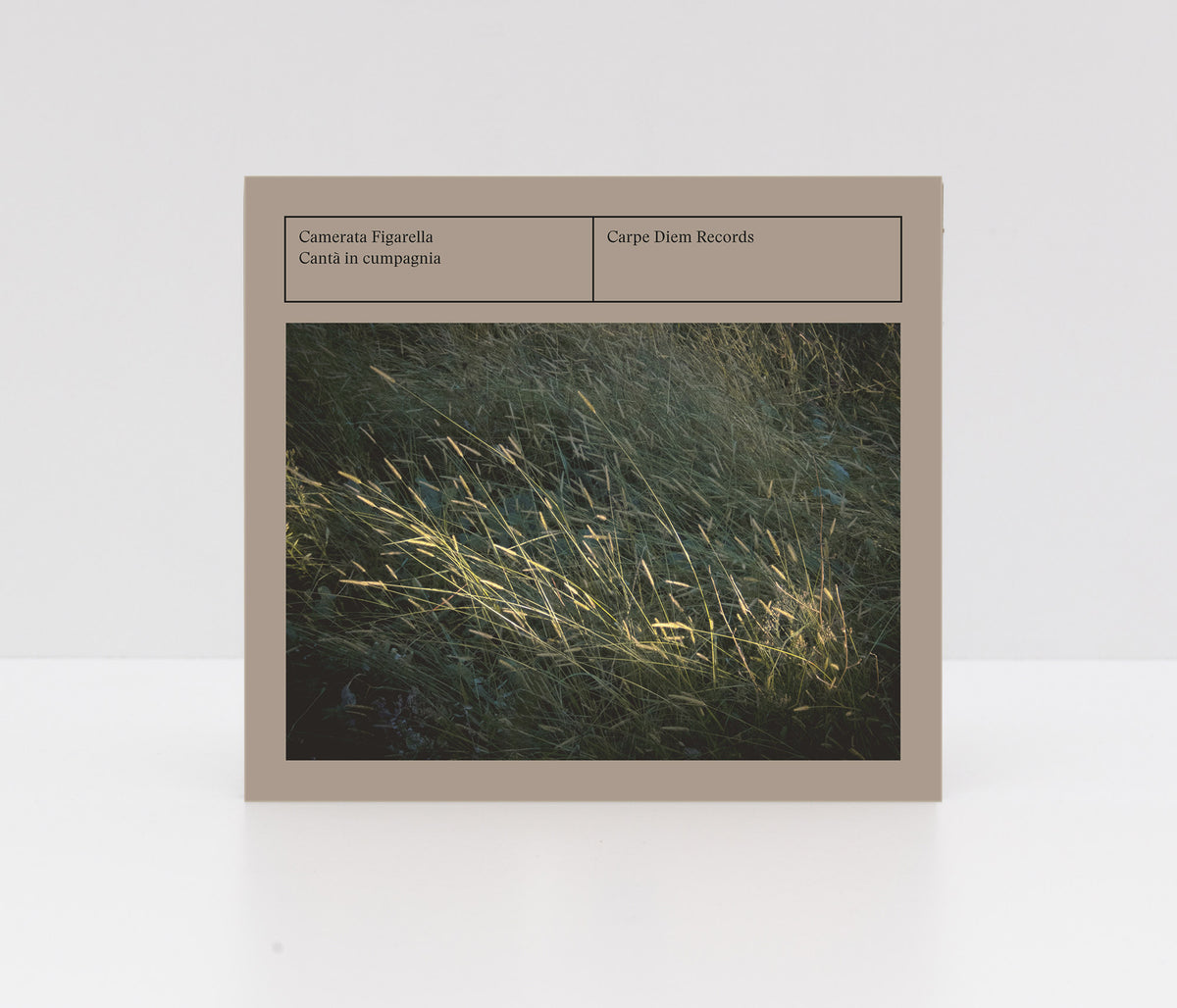
ジャケット写真:Raphaël Poletti
ブックレット写真:Lauriane Maudry(3ページ)、Jonas Niederstadt(その他すべて)
コルシカ語翻訳:Stella Retali Medori
コーポレートデザイン:Tim+Tim, timandtim.com
プロデュース:Jonas Niederstadt
© 2026 Carpe Diem Records