


The Road Not Taken
The Road Not Taken
Verfügbarkeit für Abholungen konnte nicht geladen werden
Der Norweger reiste und lebte in vielen europäischen Ländern, erlebte und spielte verschiedene Musikstile, von Pop und Folk bis hin zu alter und mittelalterlicher Musik.
Dieses sehr persönliche Album ist ein farbenfroher, emotionaler und zutiefst ehrlicher Ausdruck einer unverwechselbaren Musikerseele, die auf den vielen Wegen des Lebens unterwegs ist.
Erschienen am:
Katalognummer: CD-16324
Share


Mehr Infos zum Album
tracklist
Tracklist von "The Road Not Taken"
01. The Road Not Taken T.: Robert Frost, M.: P. U. Johansen 5:44
02. In The Garden T.: Thomas Hardy, M.: Johansen 5:41
03. Midt i Byen T.: Rudolf Nilsen, M.: Johansen 4:00
04. Hard Times Come Again No More T.+M.: Stephen Collins Foster 4:59
05. Improvisation I M.: Johansen 2:32
06. A Wanderers Song T.: John Masefield, M.: Johansen 4:13
07. Ghost In This House T.+M.: Hugh Prestwood 5:07
08. Stopping by Woods on a Snowy Evening T.: Robert Frost, M.: Johansen5:55
09. Eldorado T.: Edgar Allan Poe, M.: Johansen 3:13
10. Millom Rosor T.: Kristofer Nagel Janson, M.: Johansen 3:59
11. Improvation II M.: Johansen 1:07
12. Stanza For Music M.: George Gordon Byron, M.: Johansen 4:42
Total Time 50:17
Booklet-Text
The Road Not Taken
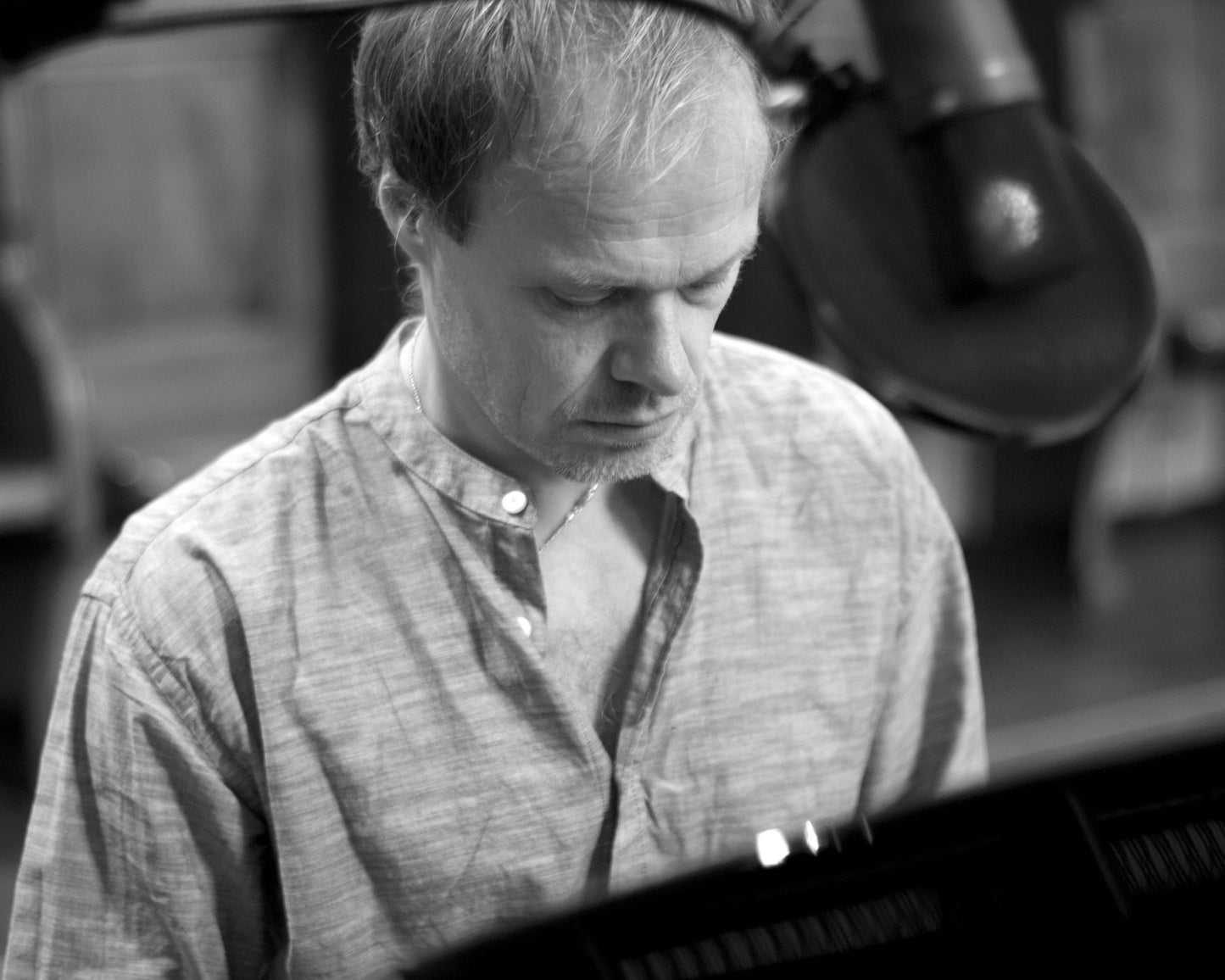
To seat yourself down at the piano and let your fingers move and push down the keys and feel how the room fills up with music is magic for me. I fell in love with the piano as a teenager, and this feeling has stayed with me ever since. My fascination for the instrument has never diminished, and though I have since spent more time with music from the Middle Ages and Renaissance - when the piano was not even invented - it has stayed with me like a faithful friend and companion. I remember very well how I used to listen to the Top 40 on the radio, which I would record on a cassette. This got me through the week until the next Saturday came along with a new hit parade. I remember listening to those songs over and over again, sitting at the piano, and working out and playing back those nice chords which I was hearing. That’s really how I learned to play the piano. I got very quick at hearing how the songs were constructed harmonically. I could sit for hours searching for the chords that I heard, and now, looking back, I know that this was one of the best musical educations that I have had, and it has been very important and useful for me as a musician later in life. I believe that the musical freedom that this gave me has shaped me as a musician, but it has also made it difficult for me to choose a single specific style of music to invest my energy and interest in. This fascination for different musical directions has never let go of me, and I think that is why I have always tried to build musical bridges and break down borders between different musical genres. My parents have also had a great influence on me. Ever since I can remember, there was singing in our house - everything from songs about class struggle and the lives of working class people to Norwegian folk songs and religious songs from my mother’s childhood.
When I was 19 years old, I joined the band Sagene Ring together with my father, Åsmund Johan-sen, Erik Fosse and later Per Martinsen. This band sings its own compositions - stories of people from Sagene, a working class district of Oslo. This experience was incredibly important for my development as a pianist and singer. I learned how important the lyrics are in a song, and how the whole musical idea of a song is developed via the storytelling of the lyrics. I learned how to support the text with inputs and solos on the piano, and how to try to tell the same story on the piano that the singer was telling with the lyrics. I wanted to follow up all the spontaneous musical ideas in the songs which, I remember, became almost an obsession for me. With Sagene Ring my interest in telling small concentrated storys through words and notes awoke, and this is now fundamental to all the music I do - every song a tiny opera!
As a 16-year-old, I became acquainted with the German romantic Lied through a recording of Franz Schubert’s Winterreise, performed by Dietrich Fischer-Dieskau and Gerald Moore. It aroused an excitement for this musical form, and I can say with certainty that the Lied and the Mélodie - the French art song by composers like Debussy and Fauré - have been a great inspiration for this album. The dialogue between the song and the piano is something that has always fascinated me, and I believe this intimate form of chamber music deserves a much larger place in our musical culture.
The main reason for my fascination for and love of Early Music, from the troubadours to Monteverdi, is precisely this: the relationship between text and music, and the freedom you have in the use of instruments to shape and give substance to the meaning of the text. There is much less notated information in Early Music than in Romantic and later music, and much more is left for each individual performer of Early Music to decide how to colour his or her performance, which encourages him or her to be more creative and spontaneous. This is a very important part of the musical identity of the ensemble Hirundo Maris, directed by my wife Arianna Savall and myself. We are both not only passionate about producing a beautiful sound with our voices, but we strive to deliver the emotions of the poetry that we sing in an honest and heartfelt way. We are both creative musicians, play various instruments, and always give a personal touch to the music that we make, whether it is a medieval Cantiga de Santa Maria or a Lied by Robert Schumann.
For this album I have selected poetry that spoke directly to me the first time I read it. These poems also have, I find, music in themselves, so all I really had to do was to entice out the music that lurks in them. They create images inside me which I have tried to recreate through my singing and piano playing. This has been a wonderfully exciting journey for me, and I hope and believe that you can hear my bag of stored-up musical ballast which I took with me to the recording sessions in the Reformierte Kirche, Küsnacht, in June 2020.
This CD was brought to life thanks to the inspiration and engagement of Arianna Savall and Jonas Niederstadt.
Warm thanks too to Christer Løvold and Sigristin Alena Fuhrer of the Reformierte Kirche Küsnacht. It was wonderful to create music in this church and get to play your Bösendorfer piano. What a fantastic instrument!
Petter Udland Johansen, Basel, August 2020
Informationen zur Aufnahme
Recorded June 21-22, 2020
Location: Reformierte Kirche Küsnacht, Zürich (Switzerland)
Balance engineer & recording producer: Jonas Niederstadt
Corporate Design: Tim+Tim, timandtim.com
Cover photography: Øivind Haug
Booklet photography: Jonas Niederstadt