


Sweet Melancholy
Sweet Melancholy
Verfügbarkeit für Abholungen konnte nicht geladen werden
Florent Marie – Renaissance-Laute
Über das Album
Das neue Soloalbum des französischen Lautenisten Florent Marie ist der Musik von John Dowland gewidmet, einem der größten Komponisten für sein Instrument überhaupt. Die Auswahl der Stücke auf diesem Album enthält ganz bewusst sowohl die düsteren und melancholischen als auch die fröhlicheren und erhebenden Stücke aus dem Oeuvre des Komponisten, wodurch ein reichhaltiger und farbenfroher musikalischer Strauß von Werken des berühmten elisabethanischen Lautenmeisters entsteht.
Musikvideo
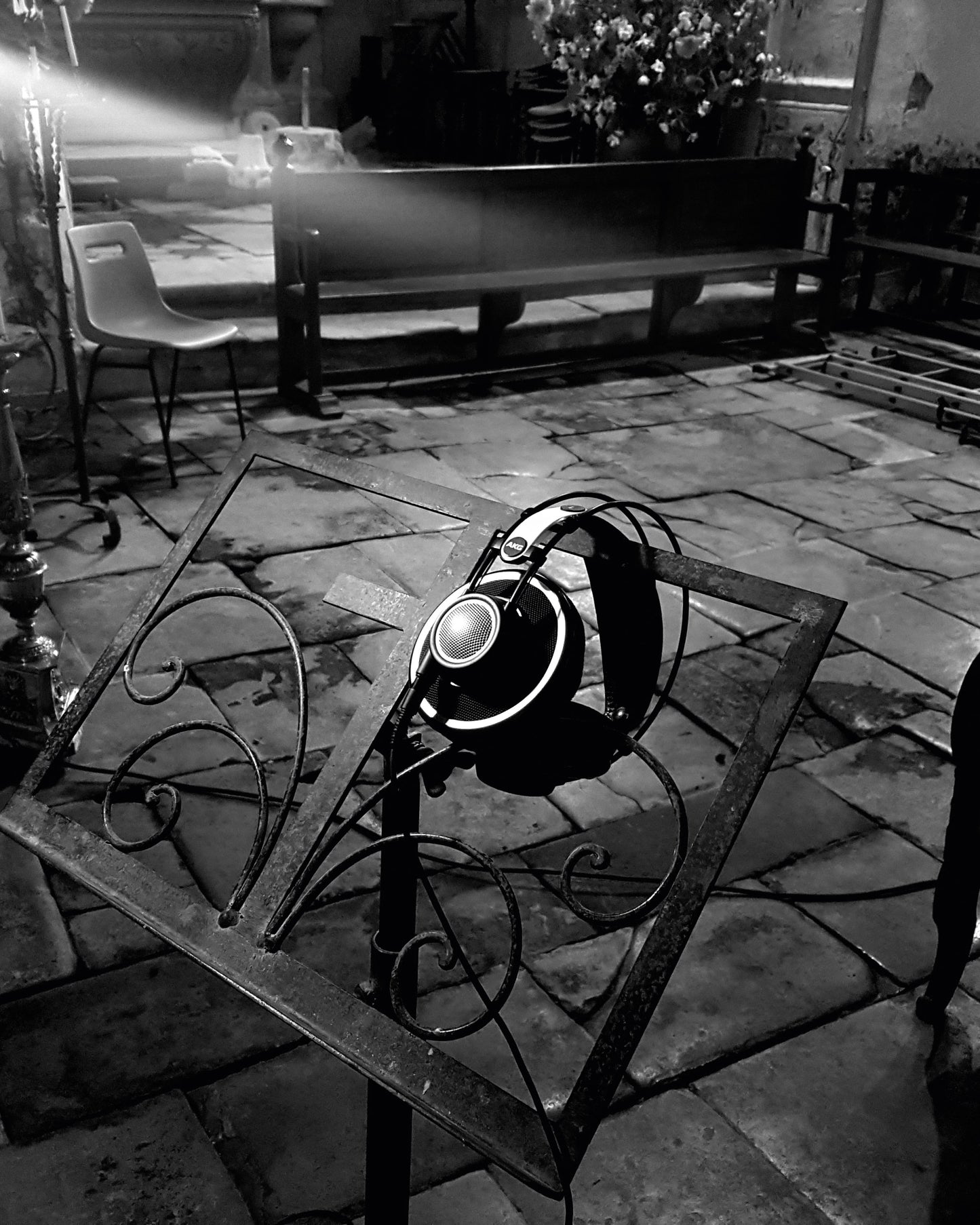
Hier spielt Florent Marie ein Stück aus dem Album in der Kirche, in der auch die Aufnahme stattfand:
Erschienen am:
Katalognummer: CD-16336
Share


Mehr Infos zum Album
tracklist
Tracklist von "Sweet Melancholy"
01. A Fancy (CLM 6) 2:52
02. Go From My Window 3:20
03. The Right Honourable Lady Rich, her Gaillard 3:02
04. Mauritius Landgravius Hessia Pavin4:43
05. Walsingham 4:06
06. A Galliard (on Walsingham) 0:57
07. A Fantasie (CLM 1) 4:52
08. Lachrimae 4:57
09. The Shoemaker’s Wife 1:19
10. Lady Hunsdon’s Puffe 1:20
11. A Fancy (CLM 5) 2:53
12. Semper Dowland Semper Dolens 3:22
13. Robin 3:17
14. Melancholy Galliard 2:02
15. Del Excellentissimo Musico Jano Dulando 6:20
16. A Galliard (on a galliard by Daniel Bacheler) 2:04
17. What If A Day 1:23
18. An Almand 1:18
19. The Right Honorable Earl of Essex, His Galliard 1:41
20. Mrs Vaux’s Jig 1:08
21. Loth To Depart 6:10
Total time 63:19
Booklet-Text
Sweet Melancholy
Fortunately, the storm had calmed down. All that remained were the last shudders of this event gradually running out of breath, but still needing to be dealt with. Better still, their discreet presence in this recording may have brought the delicious colour of Normandy heading into winter. What is more inspiring, indeed, than an old church, lost in the hollow of a damp valley, with wind and light rain at dusk, to celebrate this famous melancholy, both a form of depression and a fortunate disposition of mind of great Elizabethan and Jacobean artists?
John Dowland
« Semper Dowland, Semper Dolens », the title of one of his pavans, sounds like a genuine motto. His letters and the prefaces to his publications reveal a troubled, complex, almost paranoid character. In 1594, on the death of John Johnson, one of Queen Elizabeth’s lutenists, John Dowland applied for this vacant post, without success. Yet he had no doubts about the superiority of his talent, as he wrote the following year in a letter to Robert Cecil, the Queen’s secretary of state2. It is probably this severe disappointment that prompted him to seek his fortune “beyond the seas”3 as he wrote himself.
In 1595, he began his long journey by visiting Germany where he was welcomed with the highest honours by Heinrich Julius, Duke of Brunswick, then by Moritz, Landgrave of Hesse-Cassel. From there he went to Italy where he met Giovanni Croce in Venice, then to Padova, where, in this very same year, the lutenist Giovanni Antonio Terzi was present. After passing through Bologna he went on to Ferrara; from there the famous “Concerto delle Donne” made a strong impression on all of Italy. Carlo Gesualdo and Alessandro Piccinini were present in this city. In Genova, he probably met Simone Molinaro, one of the most famous lutenists of his time and also the author of an important body of vocal music. In Florence, where Count Giovanni de Bardi initiated a real revolution in the arts, he played in front of Ferdinando I, Grand Duke of Tuscany, who showered him with gifts. It is easy to imagine how this exceptional cultural environment could influence the art of our “Anglorum Orphei”.4
Still in Florence, he met a group of English Catholic exiles who were preparing a plot against Queen Elizabeth. Realizing the risks of his involvement in such a venture, he got scared and travelled back to Germany. In 1596, at the court of the Landgrave of Hesse-Cassel, he received a letter from Henry Noel, one of Elizabeth’s favourites, which indicated that the Queen wished him back. Unfortunately, Noel died before the return of John Dowland, and his expectations of a position at court were compromised again.
In the service of the King of Denmark, Christian IV, from 1598 to 1606, he made several trips to England. Each of these kingdoms kept a close eye on each other and would simultaneously entrust him with espionage tasks. In 1606, he finally settled in London and then entered the service of Lord Walden. On October 28th, 1612, he took up the post he had dreamt of for many years: at the age of fifty, he obtained a post as court lutenist for King James I. He probably died on February 20th, 1626.
The repertoire
A great depth proceeds from John Dowland’s music. Proof of that can be found for instance in the serious nature of his inimitable pavans, particularly the famous Lachrimae Pavan, an instrumental version of one of his most emblematic songs, “Flow My Tears”. Inimitable? In this recording, there is another pavan that Moritz, his patron at the court of Hesse, may have composed “in his honour”. Although he was known as a good musician himself, the technical and musical competence required to compose a piece of this scale is such that it is not completely unreasonable to wonder about its paternity. Anyway, the proximity of style and the fact that several passages of the Lachrimae Pavan are quoted place this piece in the universe of the English Orpheus. On the other hand, despite an apparently clear attribution, the piece entitled “Del Excellentissimo Jano Dulando” in the Schele manuscript (1619) is rather different from his other pieces from a stylistic point of view. It is, in fact, a series of variations on the theme of the song “Une Jeune Fillette”, very popular at the time of John Dowland and used as a fantastic breeding ground blooming into wonderful compositions by most of the musicians of this period.
But would the spirit of John Dowland be only black bile? Let us also consider his more energetic dances likely to restore a humoral balance that could otherwise appear badly afflicted! We can think in particular of the Earl of Essex’s Galliard, a lute version of his song “Can She Excuse My Wrongs”. Another galliard, based on a piece by Daniel Batcheler, another great lutenist, brings together an amazing complexity and a unique melodic beauty: could it be, by the way, this deep alchemical versatility that makes the magic of our composer?
Charming lighter pieces are sometimes dedicated to persons of the nobility like Mrs. Vaux’s Gig, or Lady Hunsdon’s Puffe.
Beware of the “cliché” of a melancholy poet whose inspiration only would guide his pen. Dowland, who graduated with a doctorate in 1621, or earlier, and translated “Micrologus” by Andreas Ornithoparcus, an important musical treatise, stands out in the demanding polyphonic art of fantasy. To make their identification easier, the fantasies are given here the number from the remarkable anthology by Diana Poulton5. Several variations of “ballad tunes”, popular songs, are also to be found in this recording. Everybody could sing them, but they are mainly the opportunity for John Dowland’s boundless invention to run freely. Perhaps the piece “What If A Day” is still characterized by a charming simplicity6. “Robin”, “Walsingham” and “Loth to Depart” are summits7.
At the crossroads
In the preface to his last book of ayres, “ A Pilgrimes Solace” (1612), John Dowland fiercely criticised the new generations of musicians, reproaching them for a certain arrogance (“Isn’t there a mirror effect here, after all?”). He wrote that he was accused of writing “after the old manner”. It is difficult not to understand the expression “old manner” as an echo of the musical revolution that had been taking place in Italy over the last few years8. Dowland regretted that the expression was regarded as pejorative; he considered that the only true musical “Systeme” was the one that had been prevailing “this 800 years”.
Maybe his music is rooted in the past but the expression of feelings is already present in a certain form. His journey in Italy had a great influence on him, but, even if his music is more modern than he implies, it may not yet have the theatrical dimension common beyond the Alps. In light of these considerations, John Dowland’s highly personal and poetical work is a fascinating and subtle field of investigation for the performer.
Florent Marie, May 2024
Informationen zur Aufnahme
Recorded November 3–5, 2023
Location: Église d’Habloville, Orne, France
Balance engineer & recording producer: Jonas Niederstadt
Corporate Design: Tim+Tim, timandtim.com
Cover photography: Alexander Gehring
English translation: Jean-Marie Poirier
Booklet photography: Jonas Niederstadt
Produced by Jonas Niederstadt
© 2024 Carpe Diem Records