


Giovanni Antonio Terzi: Lute Music
Giovanni Antonio Terzi: Lute Music
Verfügbarkeit für Abholungen konnte nicht geladen werden
Florent Marie - Laute der Renaissance
Über das Album
Tauchen Sie ein in die faszinierende Klangwelt der Renaissancelaute mit dieser einzigartigen Aufnahme, die dem bemerkenswerten, aber wenig bekannten italienischen Komponisten Giovanni Antonio Terzi (Ende des 16. Jahrhunderts, Bergamo) gewidmet ist. Trotz seiner herausragenden Kunstfertigkeit bleibt Terzi eine der am meisten übersehenen Figuren der italienischen Renaissancemusik – was dieses Album zu einer seltenen und spannenden Wiederentdeckung macht.
Terzis Werke verbinden Ausdruckstiefe mit außergewöhnlicher Kreativität. Seine Adaptionen von Vokalmusik zeugen von unvergleichlicher Kreativität, während seine Tänze eine faszinierende Balance zwischen rhythmischer Vitalität und raffinierter Ornamentik offenbaren. Obwohl technisch anspruchsvoll, ist seine Musik niemals rein virtuos – jedes Detail dient dem musikalischen Ausdruck, von brillanten, energiegeladenen Stücken bis hin zu tief introspektiven Werken von beeindruckender emotionaler Kraft.
Diese Aufnahme mit Florent Marie ist das erste Solo-Lautenalbum, das sich ausschließlich der Musik Terzis widmet. Mit mehr als 70 % bisher unveröffentlichten Stücken und basierend auf seltenen historischen Quellen haucht es einem fast vergessenen Repertoire neues Leben ein und offenbart den ganzen Ausdrucksreichtum der Renaissancelaute.
Eine echte Entdeckung für Liebhaber alter Musik und historisch informierter Aufführungspraxis, und ein großartiger Fund für musikalische Schatzsucher!
Musikvideo
Hier sehen Sie Florent Marie die "Toccata de 'Auttore" von G.A. Terzi spielen:
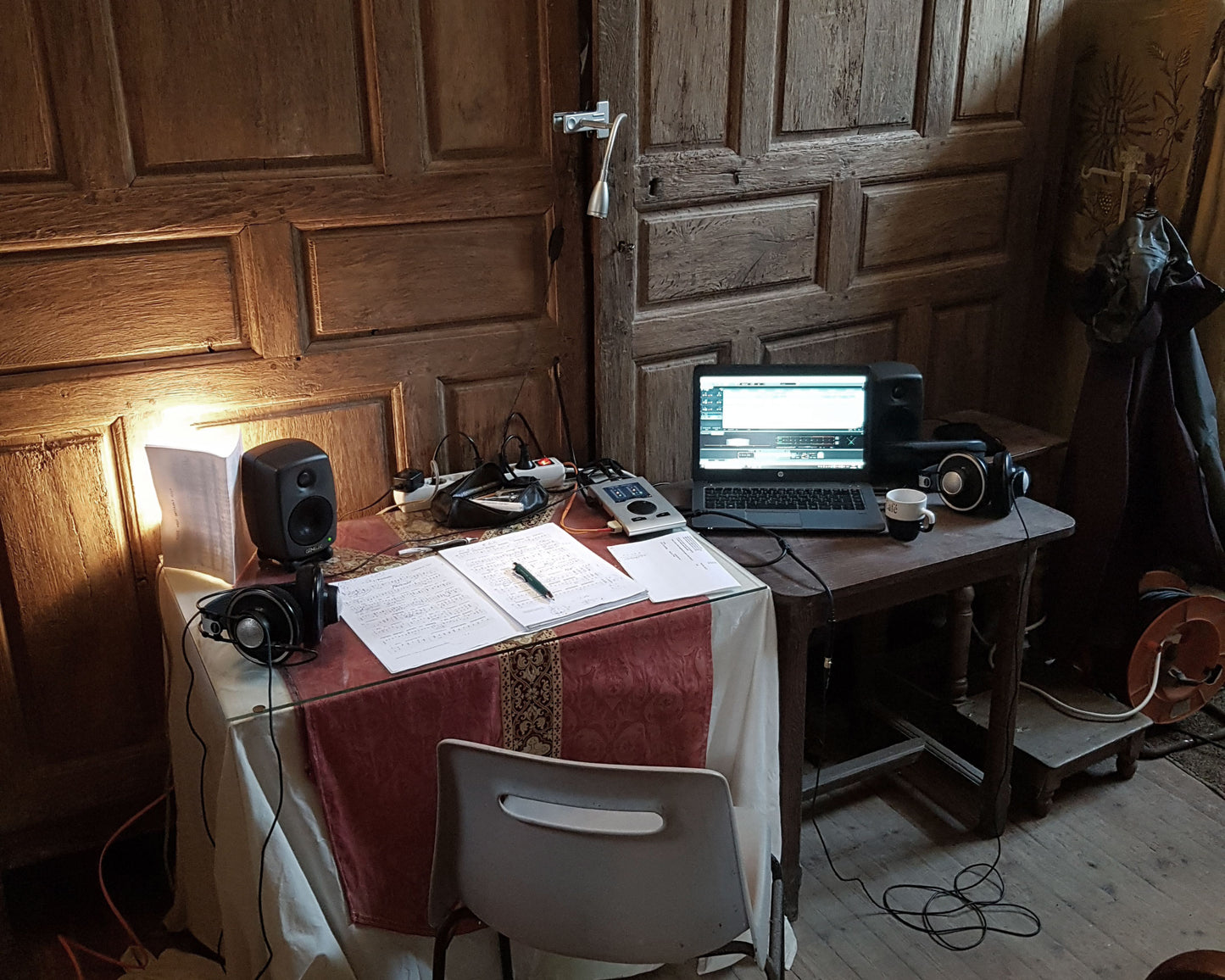
Aufgenommen im September 2021 in einer kleinen Kirche auf dem Land in der Normandie, Frankreich.
Erschienen am:
Katalognummer: CD-16327
Share


Mehr Infos zum Album
tracklist
Tracklist von "Giovanni Antonio Terzi: Lute Music"
01. Toccata Seconda dell’Autore (2) 2:55
02. Caro dolce ben mio, a 5. di Andrea Gabrieli (1)* 4:36
03. Courante francese (1)* 1:18
04. Preludio de l’Autore (2) 2:47
05. Saltarello (3)* 1:26
06. Gagliarda (1)* 1:36
07. Candide perle del Bicci nel medesimo Libro (2)* 3:33
08. Ballo Tedesco, & Francese (1)* 3:13
09. Il Saltarello del prescritto Ballo (1) 0:46
10. Fantasia Terza dell’Autore (2)* 3:52
11. Gagliarda 12. Del S.Agostino Vertoa da Bergamo composta (2)* 2:02
12. Preambulo de l’Autore (2) 1:39
13. Branle simple Francese (2)* 1:21
14. Corrente Quarto (2)* 0:36
15. Volta Seconda Francese (2)* 0:44
16. Canzona Settima del Mascara (1)* 6:41
17. Passamezzo per b quadro in tre modi (1) 3:10
18. la sua Gagliarda (1)* 3:13
19. Veni in hortum meum A Cinque. Di Orlando Lasso (1)* 5:30
20. Padovana (2)* 5:28
21. Toccata de l’Auttore (2)* 0:59
22. Ballo secondo Alemano (2) 0:59
23. Ballo Alemano Settimo (2)* 0:34
24. Volta quarta Francese (2) 1:03
25. Ahi chi mi rompe il sonno a 5. Filip. de Monte (1)* 2:37
26. Di ch’ella mosta: 2a parte (1)* 2:27
27. Pass’e mezo último (2) 2:39
28. Gagliarda del Pass’e mezo (2) 3:47
* world premiere recording
(1) Intavolatura di liutto, libro primo, Ricciardo Amadino, 1593
(2) Il secondo libro de intavolatura di liuto, Giacomo Vicenti, 1599
(3) Montreal manuscript (Bibliothèque du Conservatoire de Musique, CDN-Mc)
8-course lute by Jean-Louis Marie, 2006
Booklet-Text
Giovanni Antonio Terzi: Lute Music
Imagine - altogether, six copies of his published works have reached us. What is Giovanni Antonio Terzi’s posterity based on? We have no concrete information on his career. The only available biography of Terzi is twelve lines long and came rather late in the day, to boot. In his work entitled Scena Letteraria degli Scrittori Bergamaschi (1664) Father Donato Calvi writes about him: ‚Music was his principal activity, an occupation which earned him respect in his homeland and abroad. He enjoyed vocal music and even more instrumental music - if through the voice he rivaled the celestial harmonies, through that of the lute he rivaled the angels’ voices. He aimed at bringing each and every man to the level of fine art, by publishing several works for amateurs, and I came across only one of them mentioning this in the title [...].’ This is little to go by. However, we can supplement the portrait with a few elements: firstly, there is a Galliard by his father in his first book, which suggests that he may have started his musical career at a very early age within his family. Also, as a student at the Law faculty of Padua since 1592, Terzi was certainly there when Alessandro Piccinini stayed several times in that city as of 1594 to have his first archlutes made by Christofano Heberle. It seems this new type of lute appealed to Terzi, as a letter dated 1612 shows, in which Lorenzo Pignoria, a Paduan scholar, recommends such an instrument to the great mathematician and astronomer Galileo Galilei, precisely on the subject of a ‘theorboed lute.’1
Most of his music appears in two volumes published in Venice, one by Ricciardo Amadino in 1593, the other by Giacomo Vicenti in 1599. They represent one of the most varied collections of pieces and most importantly, of the highest quality in the lute repertoire. Standard genres such as the fantasy, dances, motet, madrigal, and French chanson arrangements are to be found along with new genres such as the canzona or toccata and certain dances from the rest of Europe, like the current, the volta, the ballo Alemano or the ballo Pollaco. The two publications have sometimes been brilliantly tackled on CD, involving lute duets and ensemble music, for which the author gives us precious information about the role of the lute in different instrument ensembles. The purpose of the present recording is to try and supplement previous ones by emphasizing Terzi’s solo pieces, whose variety and quality have hardly been explored up to now.
Reading through the music, one is immediately struck by the sheer quantity of fast divisions it contains. However, one of Terzi’s main qualities is his extreme sense of the text of the vocal sources he intabulated. Fast divisions are not an end in themselves. On the contrary, they underline the patterns of the vocal sources, which thus become literally intelligible on the instrument. It could then be argued that the tablature clearly includes indications for interpretation, this well before such indications were notated. Following Vicenzo Galilei’s precepts, Giovanni Antonio Terzi not only scrupulously respects the text but remains aware of its deeper substance - ‚[...] what the composer says, but often what he really means.‘
He is the first lutenist to publish toccate, at least in their modern form. Though already part of the early Baroque, most playing indications by Girolamo Frescobaldi seem to suit ‘Toccata II’ of our recording. It displays a structure in different sections, based on alternating moods. It may be that here the first intimation of seconda prattica emerges.
Terzi is a composer addressing modernity, as well as being a European. A ‚Courante francese‘ (nº3) full of fast divisions typical of his style loses nothing of its French character. A very successful synthesis indeed! The Italian and French ‘tastes’ are really ‘united’ in the piece. The dances are generally very virtuosic, especially in the historic sense of the term. The rhythmic variety of the ‘Gagliarda del S. Agostino Vertoa’ is a good example and so are the last sections of the ‘Passamezzo-Gagliarda’, brimming with such invention that one is led to contemplate the sheer dance steps and gets a sense of body movement from a dazzling composition full of liberty and artifice.
Other - scarce - sources contain some of Terzi’s pieces, such as the Montreal Manuscript the Saltarello (nº4) comes from and which is another version of the Gagliarda (n°5) of Book I: yet another instance of the interchangeability of the two terms in many sixteenth-century instrumental sources.
The Canzona reached maturity in the late sixteenth century; it is nearly always recognizable by its incipit and is characterized by polyphonic clarity, which contrasts with some more traditional fantasies such as ‚Fantasia Terza dell’Autore’ with a subtle counterpoint that lends it extraordinary depth. In Book I, Terzi arranged an important string of twelve canzone by Brescian organist Fiorentino Maschera, whose publications met with resounding success in the last quarter of the sixteenth century - the number of reprints is evidence of this. Here Terzi displays total mastery of the lute: all parts are featured and each is enveloped by often very fast divisions, always full of invention. In the course of the same decade, Vicenti published the famous treaties on divisions by Diruta, R. Rognoni, Bovicelli, and Bassano, and Terzi‘s books totally reflect their aesthetic code. Arguably the books apply the code to the lute: this, and given that the lute was widely played and highly regarded in the cultured milieu of the late sixteenth century is, surprisingly, a largely unexplored field. May this recording prompt the listener to play this incredibly rich music — a hopeful contribution!
Florent Marie, January 2022
Informationen zur Aufnahme
Recorded september 26-29, 2021
Location: Église d’Habloville, Orne, France
Balance engineer & recording producer: Jonas Niederstadt
Corporate Design: Tim+Tim, timandtim.com
Cover photography: Alexander Gehring
English translation: Jacques Tranier
Booklet photography: Jonas Niederstadt
Produced by Jonas Niederstadt
©+℗ 2022 Carpe Diem Records